
Women Entrepreneurship
She Built a Neighborhood Bakery. Then She Helped Her Employees Become Owners.
Proof Bakery founder Na Young Ma offers a Los Angeles example of entrepreneurship that creates opportunity beyond the founder.
By UBJ Staff · November 7, 2026
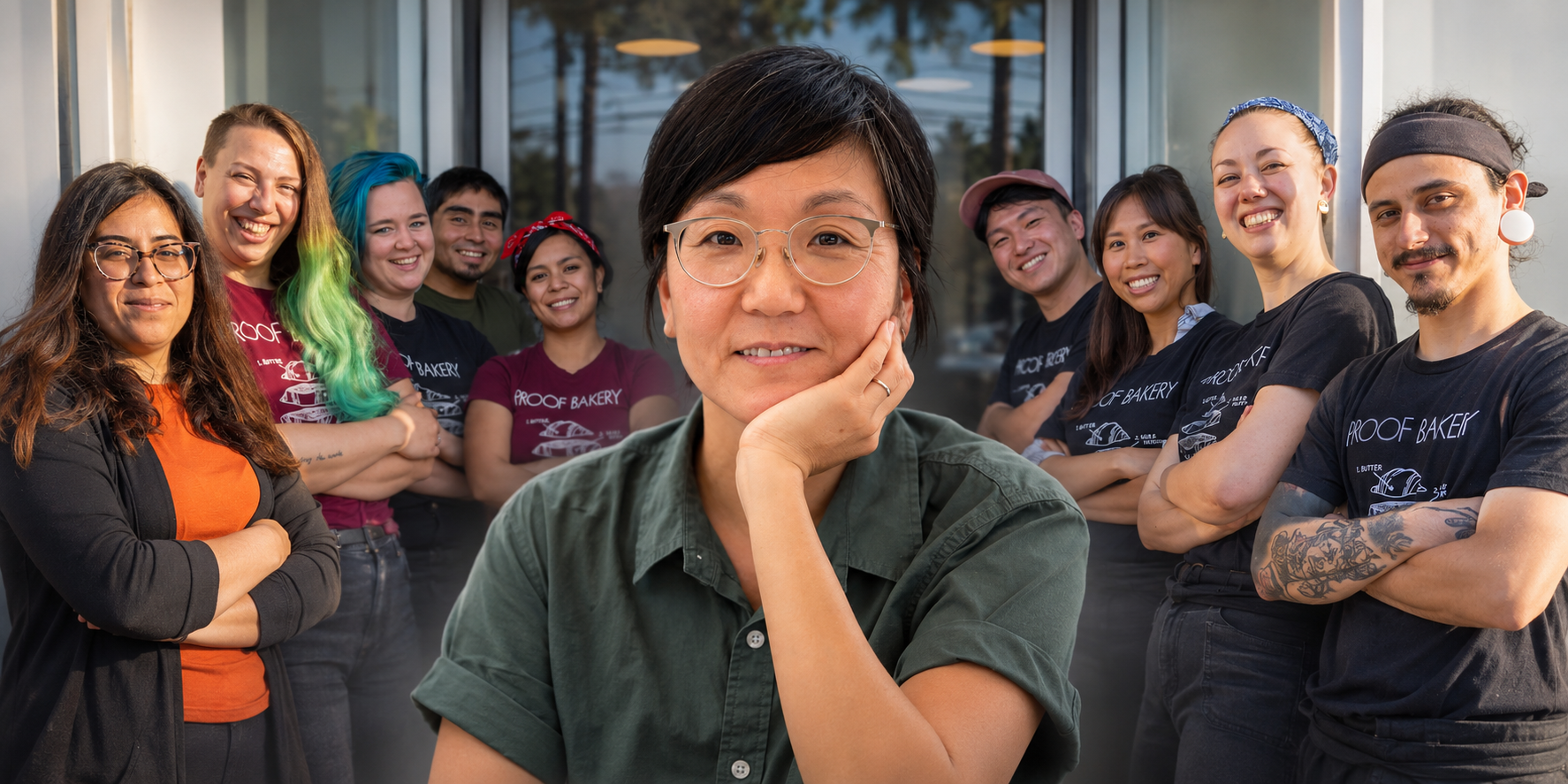
LOS ANGELES — Building a successful business raises a question that can take years to answer: What happens when the founder is ready for a change?
For Na Young Ma, founder of Proof Bakery in Atwater Village, the answer involved the people already helping the business succeed.
Ma opened Proof in 2010. In August 2021, after more than two years of planning with employees, she sold the business and converted it into a worker-owned cooperative. The transition gave employees an ownership role in the enterprise they helped operate.
Her story brings together two concerns familiar to small business owners: how to preserve what they have built and how to create a future for the people who helped build it.
Planning Beyond the Founder
According to the bakery’s account of its history, Ma wanted to create an inclusive, sustainable workplace from the beginning. Turning that intention into an ownership structure required employees and the founder to work through what an equitable model could look like.
Project Equity, a nonprofit that supports employee ownership, assisted with the transition. The organization describes collaboration and cooperation as established features of Proof’s operations before the sale—providing a foundation for the change in ownership.
The business continues to identify itself as a worker-owned cooperative at its Glendale Boulevard location.
For entrepreneurs, the significance extends beyond the bakery counter. A business can become an asset that supports a founder’s transition while giving employees a pathway into ownership.
That possibility takes preparation. Owners must consider whether their company, workforce, and financial circumstances can support such a transition.
A Local Path to Explore
Los Angeles County’s Department of Economic Opportunity offers an employee ownership initiative with Project Equity to help business owners explore selling their companies to employees while preserving jobs and supporting wealth-building opportunities. The program provides access to a no-cost consultation.
Ma’s experience offers a useful starting point for that conversation: succession planning can begin with the people who know the business best.
Why it matters: For neighborhood businesses, a founder’s departure can affect employees, customers, and the surrounding community. Exploring ownership options early gives an owner more time to plan for continuity.
Your next move: Consider what you want your business to provide—for yourself and others—over the next five to ten years. If employee ownership fits that vision, explore LA County’s employee ownership resources and request an introductory consultation.