
Latest News
Expanding Access. Building Wealth. Advancing Opportunity.
For NMSDC President and CEO Don Cravins, Jr., growing minority-owned businesses is a powerful strategy for strengthening families, communities and the American economy.
By Kim Anthony · November 8, 2026
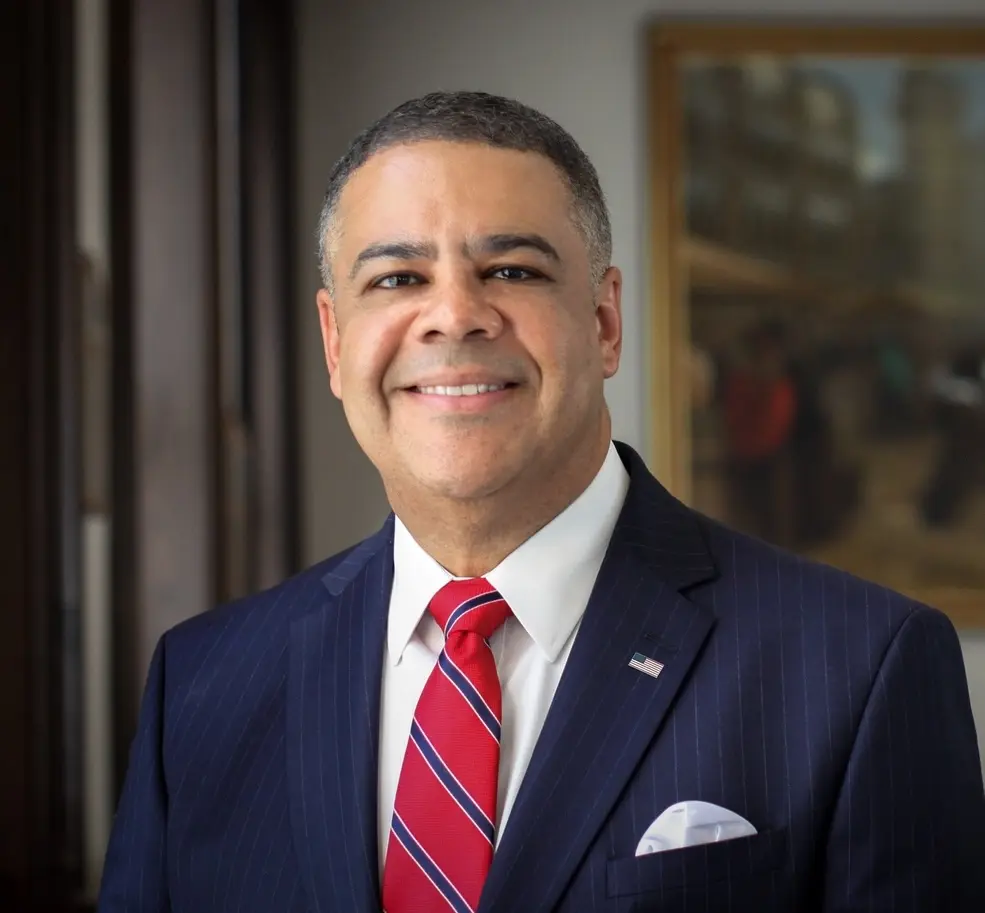
The Honorable Don Cravins, Jr. understood the power of business ownership long before he made it his national mission.
Growing up in Southwest Louisiana, he watched his parents build enterprises that supported their family and served their community. Their ventures included an insurance agency, a Black newspaper and a Creole restaurant. Entrepreneurship brought opportunity, but it also demanded resilience. Cravins witnessed the disappointments alongside the accomplishments—and the pride his parents took in having something of their own.
“I saw the pride that ownership brought my parents,” he said.
That experience continues to shape his leadership as president and CEO of the National Minority Supplier Development Council. For Cravins, the work is connected to something he knows firsthand: a business can change a family’s circumstances, create jobs and give a community greater economic strength.
Now, as NMSDC brings its Annual Conference & Exchange to Los Angeles October 25–28, he is focused on helping more entrepreneurs turn their capabilities into contracts, partnerships and opportunities to build wealth.
“I want people making deals,” he said. “I want people building wealth. I want people doing joint ventures.”
The Foundation Started at Home
Cravins’ parents did more than operate businesses. They helped establish the Southwest Louisiana Black Chamber of Commerce, creating a place where entrepreneurs could build relationships, share experiences and support one another.
He saw how much those connections mattered. Business owners needed people who understood the pressures they faced, celebrated their progress and could help them navigate a difficult season.
Around the dinner table, he also saw what entrepreneurship made possible for his own family. His parents’ work helped build a good life for him and his siblings, giving ownership a meaning that extended beyond revenue.
Those early lessons followed him through a career in public service, civil rights and economic development. His work has taken him from Louisiana to Capitol Hill and the National Urban League, bringing different perspectives to a consistent purpose: expanding economic opportunity.
At NMSDC, that purpose means helping minority-owned businesses develop, become visible to potential customers and compete for work that can move their companies forward.
Making the Business Case
Cravins is leading through an environment in which supplier diversity programs face scrutiny and some corporations are changing how they describe their initiatives.
His response is to keep the focus on the business proposition.
Corporations need capable suppliers. Entrepreneurs need opportunities to demonstrate their value. Strong relationships between the two can produce better options for buyers and meaningful growth for business owners.
“We were created by big business to help them find smaller businesses,” he said. “And when they work together, everybody wins.”
Cravins believes that purpose deserves to be communicated more clearly. Minority-owned companies bring expertise, innovation and capacity to the marketplace. Their success reflects the work required to compete and deliver.
“These represent dollars that small, minority-owned businesses competed for and won,” he said.
That distinction matters. Behind a contract is an entrepreneur who developed a service, invested in a team, managed risk and earned a customer’s confidence. The resulting revenue can help that company hire employees, strengthen operations and pursue larger opportunities.
Cravins wants the broader economic contribution understood as well. Minority-owned businesses employ people from across their communities. Their payrolls support households. Their purchases support other companies. Their taxes help fund public services.
“Our mission is about business and opportunity,” he said.
The Wealth-Building Opportunity Within the Network
For entrepreneurs pursuing corporate contracts, Cravins offers another growth strategy: pay attention to the businesses around you.
He sees significant potential in minority-owned companies doing more business with one another.
“It’s minority businesses working with other minority businesses,” he said.
The opportunity takes several forms. An established company may become a customer for an emerging supplier. Two smaller firms may combine their strengths to pursue a contract. A business owner with access to one market may find a partner with the expertise needed to enter another.
Cravins also challenges the assumption that minority-owned always means small. Companies within the network operate at different scales, and larger enterprises can create opportunities for other suppliers through their own purchasing decisions.
For Black entrepreneurs and other business owners working to grow, that means looking at peers as potential customers and strategic partners. The person across the table may have a business need your company can meet—or a capability that helps you compete for work you could not take on alone.
That thinking is central to Cravins’ vision for the Los Angeles conference. He wants greater emphasis on conversations and connections that can develop into business relationships.
The goal is for attendees to leave with something they can build on: a promising introduction, a prospective partnership or a clearer path to their next customer.
Be Ready for the Business You Want
Cravins pairs his commitment to access with a direct message about preparation.
“Lead with why you’re the best,” he said.
Business owners should arrive ready to explain what they do, whom they serve and why their company is a strong choice. A capability statement should communicate relevant experience and expertise. An introduction should give a buyer a clear reason to continue the conversation.
For founders who have spent years building their companies, that requires translating hard-earned experience into customer value. What problem can the business solve? What results can it demonstrate? What makes its approach useful to this particular buyer?
Certification helps establish visibility. Preparation helps an entrepreneur make productive use of it.
Cravins encourages business owners to seek assistance from regional supplier development councils, chambers and other business support organizations before arriving. Clearer materials and a stronger presentation can help an owner communicate with confidence when an opportunity appears.
“This is the time to shine,” he said.
His message recognizes both sides of business growth: institutions must help create access, and entrepreneurs must be prepared to pursue it.
A Legacy the Next Generation Can See
Cravins’ optimism about the future rests in part with young entrepreneurs. He sees a generation equipped with technology, information and creative tools that earlier business owners could scarcely imagine.
He wants those young people to see a place for themselves in the economy—and to believe their ideas and effort can lead somewhere.
“A little boy from Oakland, California, a little girl from Birmingham, Alabama,” he said, “they’ve got to be able to see themselves in that American dream.”
Cravins knows the importance of that example. His parents made ownership visible. He saw them build, adapt and support others doing the same. Their businesses gave him an early view of how enterprise could strengthen a family and contribute to a community.
His national mission carries that lesson forward.
As NMSDC gathers in Los Angeles, he is calling on entrepreneurs and corporate leaders to recognize the value they can create together. Each purchasing decision, partnership and business relationship holds the potential to help a company grow—and extend that growth to the people who depend on it.
“We’re going to work with anybody and everyone who wants to help us do that,” Cravins said, “because it’s good American work. It’s good for the country.”