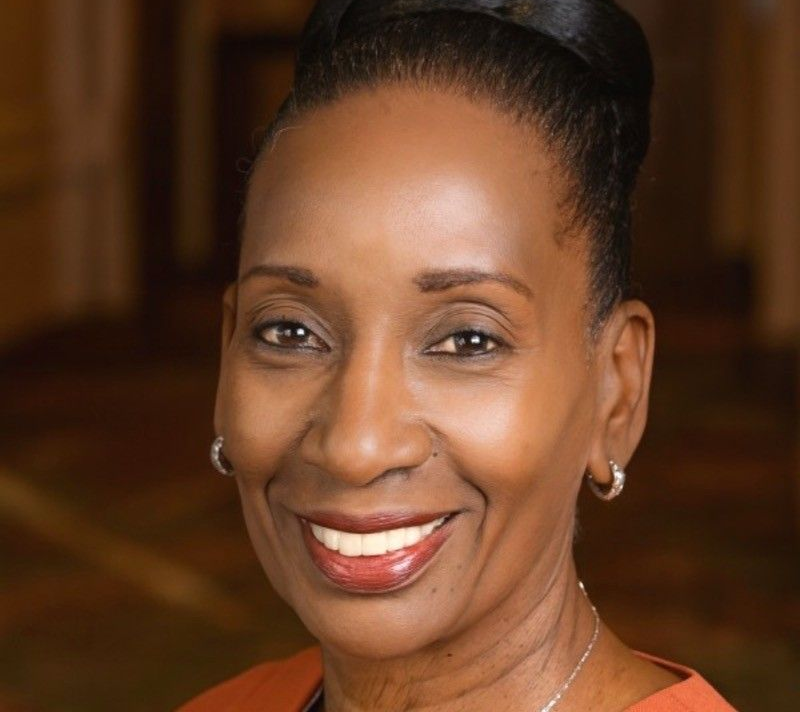
Kim Anthony • August 18, 2026

A Sweet Legacy: 27th Street Bakery Celebrates 70 Years in South Los Angeles

The third-generation, Black-owned business has turned a family recipe into a West Coast enterprise—while remaining rooted in the community that helped it grow.

By Urban Business Journal Staff

For 70 years, the ovens at 27th Street Bakery have produced more than sweet potato pies. They have helped sustain a family legacy, create neighborhood jobs and preserve an important piece of Black business history in South Los Angeles.

Located at 2700 South Central Avenue, the third-generation, Black-owned bakery is celebrating seven decades in business—a milestone few small businesses ever reach.

Best known for its homemade sweet potato and pecan pies, 27th Street Bakery has grown from a neighborhood favorite into what the company describes as the largest manufacturer of sweet potato pies on the West Coast.

From Southern Roots to a Los Angeles Landmark

The business began during the 1930s when Harry and Sadie Patterson opened a restaurant along Central Avenue, then the cultural and commercial heart of Black Los Angeles.

The Pattersons brought Southern recipes and traditions with them, creating food that offered Los Angeles’ growing Black community a familiar taste of home.

In 1956, the family converted the restaurant into a specialty bakery producing sweet potato pies, fruit pies, cakes and other desserts. That transformation established the business now known as 27th Street Bakery.

The next generation assumed leadership in 1980, when the founders’ daughter, Alberta Cravin, and grandson, Gregory Spann, took over the operation. Today, the bakery is led by sisters Denise Cravin-Paschal and Olympic gold medalist Jeanette Bolden-Pickens, along with Bolden-Pickens’ husband, Al Pickens.

Five additional family members are reportedly involved in the business, continuing a tradition of shared ownership and responsibility.

More Than a Bakery

The bakery’s longevity is especially significant because of where it stands.

Central Avenue was once home to a thriving collection of Black-owned hotels, nightclubs, restaurants and professional offices. As Los Angeles changed and families dispersed into other neighborhoods, many of those businesses disappeared.

27th Street Bakery remained.

Its presence represents both economic endurance and cultural preservation. Across several generations, the company has provided employment, stability and a trusted gathering place for neighborhood residents.

The bakery has also learned how to grow without abandoning its roots.

Customers can still walk into the Central Avenue storefront and purchase fresh pastries, but the company now accepts online orders, offers nationwide shipping through Goldbelly and provides local delivery through services including DoorDash, Uber Eats and Postmates.

The company was also selected as an approved supplier for the Super Bowl LVI Business Connect program—an initiative that identified qualified, diverse Los Angeles-area companies to compete for contracting opportunities connected to the event.

That combination of tradition, distribution and supplier readiness offers a valuable lesson for other community-based businesses: longevity often depends on preserving what customers love while continually developing new ways to reach them.

Seventy Years—and Still Growing

In recognition of the anniversary, 27th Street Bakery is offering slices of sweet potato pie for 70 cents on select Saturdays through October 31, according to reporting from LA Local.

The promotion is more than an anniversary special. It is an invitation for Los Angeles residents to support a business that has supported its community for generations.

At a time when many independent restaurants and neighborhood businesses are struggling with rising costs, changing consumer habits and increased competition, reaching the 70-year mark is an extraordinary achievement.

It demonstrates the power of family succession, a trusted product, community loyalty and the willingness to adapt.

The Business Lesson

The story of 27th Street Bakery offers several practical lessons for entrepreneurs hoping to build companies that last:

  • Build around a signature product. The bakery became widely recognized for one distinctive offering—its homemade sweet potato pie.
  • Protect the brand’s story. Its history and family recipe are not simply sentimental details; they are competitive advantages that distinguish the company from mass-market producers.
  • Prepare the next generation. Leadership has successfully transferred through three generations, allowing the company to preserve family ownership.
  • Expand how customers can buy. Nationwide shipping, online ordering and delivery platforms have taken the bakery beyond the geographic limitations of its storefront.
  • Pursue supplier opportunities. Certification and participation in procurement programs can expose established small businesses to larger contracts and new institutional customers.
  • Remain connected to the community. The company’s enduring relationship with South Los Angeles has created a level of loyalty that advertising alone cannot purchase.

For entrepreneurs throughout Los Angeles, the Inland Empire and beyond, 27th Street Bakery is proof that a neighborhood business can preserve its identity, expand its reach and build an enterprise capable of outliving its founders.

Seventy years later, the family is still baking—and Los Angeles is still showing up for another slice.

Support This Legacy Business

27th Street Bakery
2700 S. Central Avenue
Los Angeles, CA 90011
Tuesday–Saturday, 8 a.m.–4 p.m.
323-233-3469

Order or learn more at 27thStreetBakery.com

This story was inspired by the CBS Los Angeles report celebrating the bakery’s 70th anniversary. Additional historical information was verified through the 27th Street Bakery, the Los Angeles Conservancy and LA Local.


By Kim Anthony • September 25, 2026
Beginning January 1, 2027, California sales and use tax will generally apply to prewritten software delivered electronically or accessed remotely, including many Software-as-a-Service subscriptions. CALIFORNIA — If your business sells software, provides access to an online platform or pays for software subscriptions, a tax change belongs on your 2027 planning list. Under Senate Bill 122 , signed into law June 29, 2026, California is expanding the sales and use tax definition of tangible personal property to include certain digital products and associated copyright or patent interests. That means retail sales of covered products in California—and covered products purchased from a retailer for storage, use or other consumption in California—may be taxable beginning January 1, 2027 . The change generally affects sellers of prewritten software, SaaS providers, businesses that license or provide remote access to prewritten software, and the customers who buy those products. What counts as a digital product? For this law, a digital product is prewritten computer software delivered on physical storage media, transferred electronically or accessed remotely. Prewritten software is software held for general or repeated sale or lease. It can qualify even if it was originally developed for a particular customer or for a company’s own use. A combination of two or more prewritten programs can also qualify. What is outside this definition? The law does not classify every digital purchase as a taxable digital product. The following are excluded from its digital product definition: Digital assets, such as cryptocurrency Digital audio works, such as music, spoken recordings and ringtones Digital audiovisual works, such as movies and videos with sound Digital books, or eBooks Digital infrastructure, such as cloud platforms customers use to create, deploy or run their own software applications Digital video game products Digital visual works, such as computer-generated artwork The law also provides exemptions for custom computer software , digital products representing a service other than SaaS, digital products transferred with reproduction and distribution rights, and digital products purchased solely for use outside California. Businesses should review the details of a transaction before treating it as excluded or exempt. A $5 million rule for certain large purchases In some transactions, responsibility for paying the tax can shift from the retailer to the purchaser. The rule concerns a retailer’s aggregate gross receipts from digital products sold to the same purchaser that are transferred electronically or accessed remotely. For 2027 , the threshold is more than $5 million in that calendar year . Beginning January 1, 2028 , the test looks at whether those receipts exceeded $5 million in the current or preceding calendar year. When the rule applies, the purchaser may need a Use Tax Direct Payment Permit and may have to report and pay the tax directly to the California Department of Tax and Fee Administration (CDTFA). Location matters for local taxes For digital products transferred electronically or accessed remotely, the place of sale for local and district tax reporting is generally the customer’s address. The place of use is where the person accessing the product is located. That distinction matters when a company’s billing address and its software users are in different places. CDTFA explains the rules in its Tax Guide for Retailers and Purchasers of Digital Products . What sellers need to do California digital product sellers that are not already registered with CDTFA may need to obtain a seller’s permit , file sales and use tax returns, and report and pay tax on taxable retail sales. Out-of-state sellers that are engaged in business in California under Revenue and Taxation Code section 6203 may need a Certificate of Registration—Use Tax . They would collect and report use tax on covered sales to California consumers and pay it to CDTFA. Registration is available through CDTFA Online Services . The UBJ takeaway: Software sellers can use the months before January 2027 to review their products, customer locations, invoicing and registration needs. Buyers can review their software agreements and ask vendors how the new tax will appear on invoices. For the definitions, exemptions and reporting rules, start with CDTFA’s digital products tax guide
By Kim Anthony • September 24, 2026
Beverly Kuykendall helps businesses navigate complex markets, build stronger partnerships and turn ambitious ideas into workable plans. Some business leaders see a procurement requirement and stop at the obstacle. Beverly Kuykendall asks what it would take to move forward. Over decades in federal acquisition and commercialization, Kuykendall has helped organizations work through the demands of government contracting while keeping their commercial goals in view. Her career has included executive roles as President of Government Business, Chief Strategy Officer and President. In each, she has worked at the point where strategy must become something a team can actually execute. Today, Kuykendall advises mission-driven organizations and manufacturers seeking new routes to growth. For companies pursuing domestic production, that may mean beginning with practical steps such as packaging, labeling, kitting, light assembly or fulfillment. These staged solutions can help a manufacturer establish domestic capacity and enter a market while building toward a larger goal. She also helps manufacturers develop reseller and distribution programs with clear standards for selecting partners, onboarding them and measuring performance. The aim is to grow revenue while protecting the relationships and reputation a business has worked hard to build. Kuykendall’s strength lies in making complicated systems understandable and actionable. She sees how procurement rules, supply chains and commercial partnerships fit together—and where an organization can make its next move with confidence. For entrepreneurs and business leaders trying to enter a demanding market, that perspective matters. A complex path can still be a path. Kuykendall’s work helps organizations find it, prepare for it and take the next step.
By Kim Anthony • September 24, 2026
Felecia Fisher-Shamu has built a women-owned furniture manufacturing business whose work reaches from Los Angeles hotels to destinations around the world. Before Felecia Fisher-Shamu’s work appeared in luxury hotels and major entertainment venues, she was building relationships with the people who knew those spaces best: hotel engineering and housekeeping teams in Santa Monica and Los Angeles. She listened, learned what the work demanded and built a business around delivering it well. Today, Fisher-Shamu is CEO and co-founder of Vitality Casegoods, Restorations, and Furniture Manufacturing, Inc. In a competitive industry where women business owners have had to establish their place, she has earned a reputation for custom furnishings, furniture design and restoration. She has done it with creative vision, perseverance and a team of skilled craftspeople. Vitality’s work has reached properties in the United States, Anguilla, Saudi Arabia and Canada. Fisher-Shamu has contributed to sustainable projects with Google and ARIA in Las Vegas, as well as furnishings for major hotels and entertainment spaces. Her team’s work has also supported events associated with the NAACP Image Awards, the Daytime Emmys and Oscar celebrations, including a VIP gala honoring Black Panther costume designer Ruth E. Carter. Her passion for restoration gives the business another dimension. Vitality helped restore antiques from Paris for Lumière at the refurbished Fairmont Century Plaza in Los Angeles. Earlier in her career, Fisher-Shamu restored antiques for the Four Seasons Hotel Beverly Hills. She values the artistry in preserving a piece’s character as much as the skill required to create something new. Even during the pandemic, when the hospitality industry faced extraordinary disruption, Vitality continued to win work. Projects included SoFi Stadium’s Owners Club, Loews St. Louis Live! hotel and Circa Resort & Casino in Las Vegas. Fisher-Shamu’s story celebrates what a woman-owned business can build through talent, trusted relationships and the determination to keep going. Her furnishings may be found in celebrated spaces, but the deeper achievement is the enterprise she and her team have crafted along the way.
Show More